
Overwhelm Is the Ocean. Clarity Is the Oar.
A founder stares at a packed calendar, no time, no space, no air.
A surgeon’s hands are steady, but her mind spins before the first cut.
A CEO wakes at 3AM, wide-eyed, thinking: what have I missed?
This isn’t overwhelm.
It’s signal overload.
Not too much to do, too much unfiltered.
Too many ‘shoulds’ disguised as urgency.
Too many inputs mistaken for insight.
Overwhelm isn’t a personal failing.
It’s what happens when decisions are made reactively, not deliberately.
When complexity outpaces clarity.
And clarity, is oxygen.
The highest performers don’t escape overwhelm by doing more.
They escape it by seeing differently, doing less but better.
The Drift
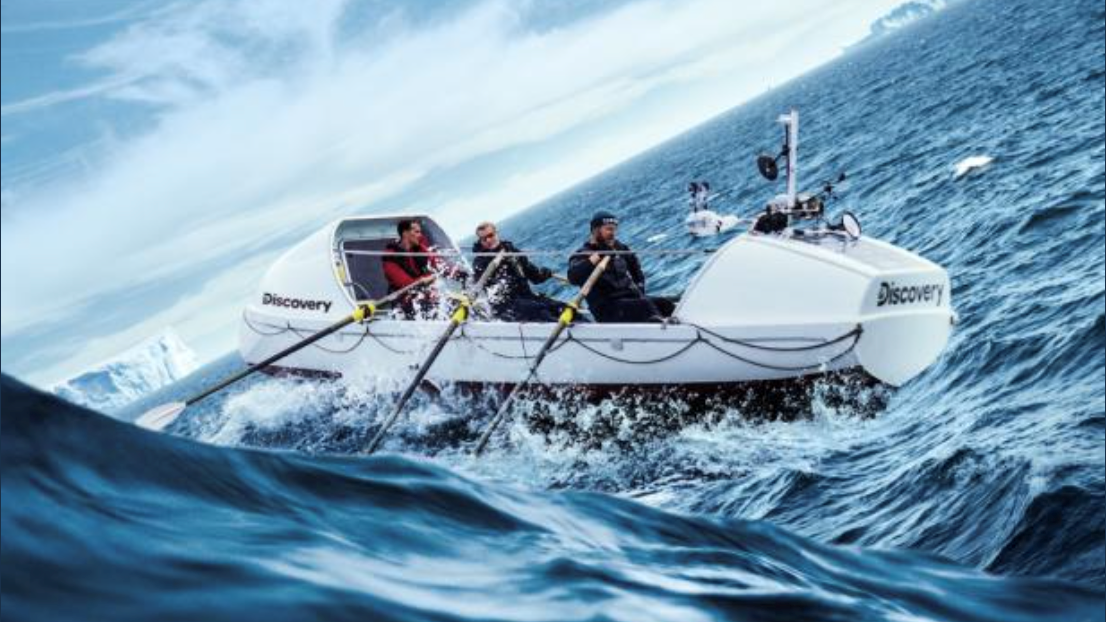
Imagine you're in a small rowboat, mid-ocean.
Waves swell, wind shifts, fog rolls in. You check the compass, no reading.
You reach for your oars, but panic floods your system. Should I paddle straight ahead? Wait, maybe to the right?
This is what overwhelm feels like from the inside.
Directionless action.
Full systems go, with no clarity on what forward even means.
You don’t need more force.
You need orientation.
A moment of clarity.
A way to cut through and find your next true move.
The WIN Principle: What's Important Now?
Elite athletes don’t overcome chaos with adrenaline.
They return to the moment.
Top surgeons don’t suppress emotion.
They observe it with clarity, and use it as valuable data to translate noise into deliberate, ordered action.
And elite decision-makers, those who consistently move from signal, not noise, all **ask one precise question:
What’s Important Now?
Not what's on the list.
Not what will quiet the anxiety for five minutes.
Not what looks good to others.
But what is essential, here, now, in this moment of movement?
This is not a lifehack or a mantra.
It’s a mental scalpel, a way of slicing through noise and naming truth, often uncomfortable, always essential.
One question that returns leadership to its foundation: clear perception followed by decisive action.
The Founder's Fog
Take Annelies, a founder of a scaling SaaS company.
Her days are stacked back-to-back: investor updates, talent decisions, product pivots.
By 5PM, her team wants vision, but she can’t even hear herself think.
We stripped it back.
“What’s Important Now?”
She paused.
Not what’s loudest. Not what’s urgent.
What’s truly decisive.
Then she moved:
She killed a weekly status meeting across three departments, replacing it with one shared dashboard and a single decision-focused sync.
She declined five advisory calls that didn’t serve her core priorities, and delegated two investor updates to her COO.
She cleared two hours each morning for deep strategic work—guarded time, non-negotiable.
By week’s end, her calendar had contracted by 20%, and her decision-making felt faster, lighter, more aligned.
Clarity didn’t come from doing more.
It came from seeing what truly mattered, now, and acting decisively.
The Surgeon’s Split
Or think of Els, a trauma surgeon.
Her body knew what to do. But pre-op, the flood of protocols, liabilities, emotional load from her personal situation.
She carried it all in her chest.
We didn’t work on mindset.
We worked on sequence.
“What’s Important Now?”
One breath.
One question.
One cut.
She began to carry the same calm into board meetings and even family life.
Why? Because overwhelm isn’t always solved in the operating room.
It’s solved in the way we see our role in the moment we're in.
The CEO at 3AM
And that CEO who woke at 3AM, spinning in possibilities?
He didn’t need another productivity system.
He needed a threshold question. One that could cut through the fog before the day began.
We designed a pre-morning ritual:
Observe. Breathe. Sit still.
Ask: What’s Important Now?
Respond by writing down one true move and execute it before the rest of the world floods in.
Overwhelm ended before the inbox began.
Overwhelm Isn’t Chaos. It’s a Call to Cut.
You don’t need more hours.
You need fewer leaks.
Fewer lies disguised as obligations.
Fewer loops left open in your head.
Because in that sea of too much,
clarity doesn’t come from paddling harder.
It comes from cutting, decisively.
You can’t eliminate complexity.
But you can cut to the one move that matters most.
And that cut changes everything.
Use the OAR Model
When the waters rise:
Observe → Pause. Name the noise. Feel it, don’t react to it.
Ask → “What’s Important Now?” Let the question do its work. Feel the cut.
Respond → Take that step. Fully. Deliberately. No retreat.
This is how elite performers row through overwhelm.
Not with panic.
With precision.
Final Reflection
Clarity isn’t found by thinking harder. It’s earned by choosing less.
So the next time you feel the fog, when your chest tightens, your inbox blinks red, your mind loops “what have I missed?”
Don’t ask: How do I manage it all?
Ask:
“What’s Important Now?”
Let that be your oar.
Then move, clearly, fully, and without retreat.
