
Expectation or Wonder
The lens that shapes your leadership
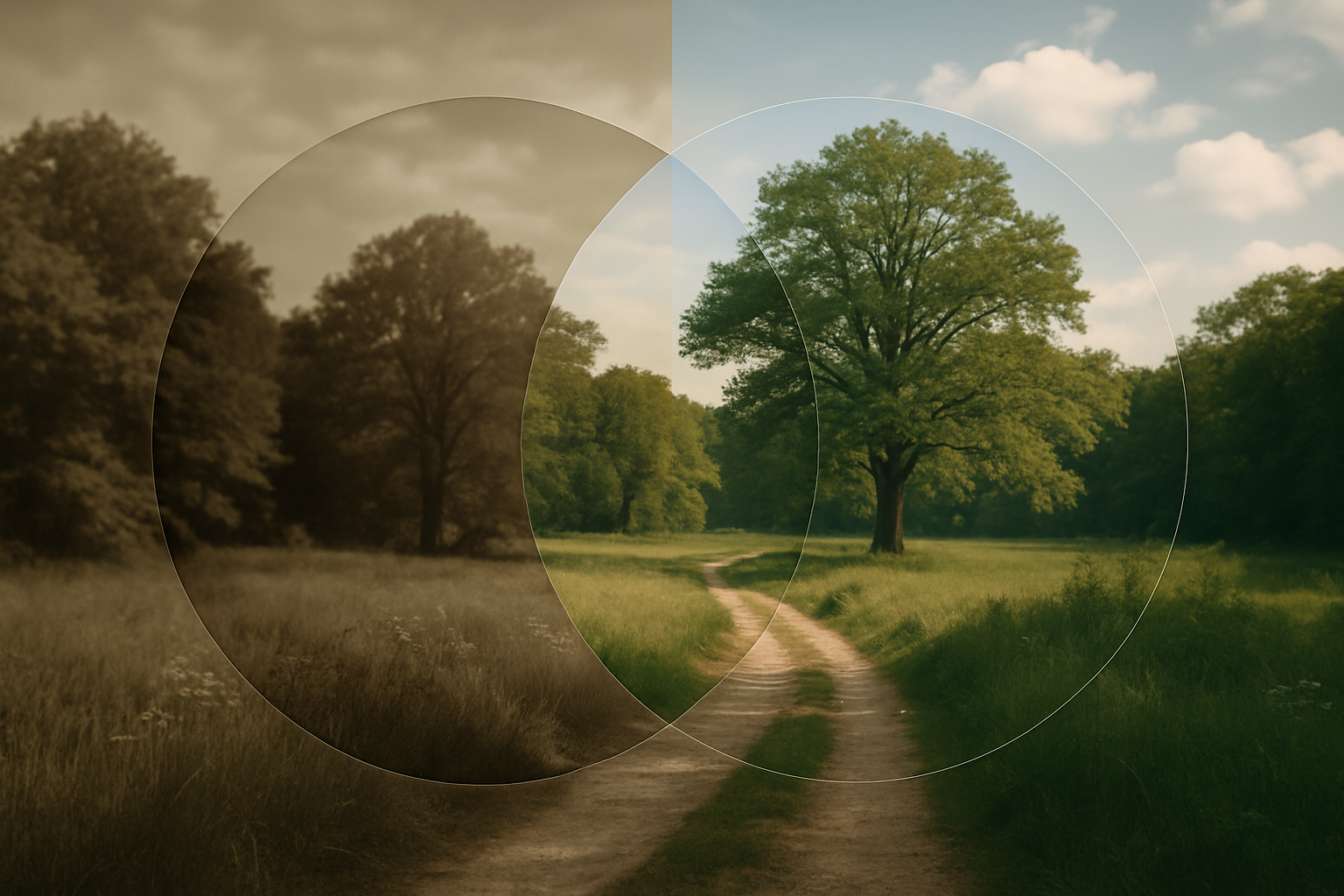
Reality does not change — the lens through which we perceive it does.
If you want comfort, stop here.
This is not a feel-good read, it is a mirror and a knife.
A mirror to see what is true, a knife to cut away what is not.
Enter with intent.
If you want clarity, read deliberately, question yourself, act on what matters.
Two lenses, one reality
There are only two lenses through which we can look at reality. Every decision, every conflict, every moment of clarity or confusion flows from the lens we choose.
Most leaders don’t choose consciously. They default to the first lens without even knowing it.
The lens of expectation
Expectation narrows your vision to what you already know. It pulls you toward the familiar and filters out anything that does not fit this familiarity. Through this lens, you do not meet the present; you meet your past. And you mistake that for intelligence.
Here is how this lens showed up for one VP I worked with.
She walks into a quarterly review meeting. The last two quarters were rough, full of internal tension and back-channel conflict, so she enters with a silent script already loaded: “They will defend, I will push.”
That expectation of ‘they against me’ becomes her filter. She listens only for what confirms the story she already believes. When a frontline manager carefully raises a concern about a bottleneck in the customer handover process, she dismisses it. She has ‘seen this issue before’.
Back then, the root problem was not the process but a lack of trust in the team. Distorted by expectation, she believes she already understands the situation. She moves on. But the team had uncovered a new pattern in the data. In reality, the bottleneck had shifted. The present moment was fresh, new, and different. She did not meet this moment. She met the memory of an old one.
Two months later, the issue exploded. She wonders why no one warned her. The truth is, they did. Expectation made her blind.
Expectation is comfortable. It protects your sense of control. It keeps you loyal to what you already know. But it quietly locks you out of reality.
The lens of wonder
Wonder opens the mind. It invites curiosity instead of confirmation. Through this lens, the present is allowed to speak for itself. It can contradict the past without threatening your identity, because you are not trying to control what you see. You are aware that ‘you don’t know’.
Undistorted reality lives in this second lens.
Here is how this lens showed up for one CEO I worked with.
A CEO meets her product team after a surprising drop in customer retention. Instead of walking in with conclusions, thinking she knows, she walks in witha simple stance: “I don’t know. I’m not here to confirm anything. I’m here todiscover what I’m missing.”
This is wonder. It widens perception.
She asks open questions from genuine curiosity, intent on truly understanding. She listens without rushing to label. She allows reality to reveal itself instead of forcing it to fit her old expectations. Because she is not defending the past, the team feels safe to share an uncomfortable truth. Customers didn’t leave because of product flaws. They left because the onboarding process created silent frustration.
It wasn’t a product problem. It was a systems problem.
Her openness uncovers the real root cause weeks earlier than expected. A calm, precise decision follows. Retention stabilises. Wonder made her see what expectation would have hidden.
And here is the deeper truth:
Before leaders can see others clearly, they must learn to see themselves clearly.
The same lens turned inward
Every external distortion begins as an internal one. Expectation is not just how you look at your team. It is how you look at yourself.
If you want to lead with clarity, you cannot begin with theories about leadership, personality types, or playbooks. You begin with direct observation. Not abstractly. Not by meditating in a corner alone. Not through a list of daily questions.
You study yourself in relationship, because all life is relationship. Your reactions to people, pressure, success, frustration, and uncertainty reveal the structure of your mind more honestly than any self-reflection exercise.
This is where true self-knowledge begins.
You are not an abstract idea to analyse, you are a living reality to observe. If you study who you expect yourself to be, you cannot see who you are now. And what you do not see, you cannot change.
Most leaders try to understand themselves through accumulated knowledge, but knowledge is always of the past. Learning happens only now.
A mind burdened with the past cannot see the present moment as it is. This is why we repeat patterns even when we ‘know better’. We react from psychological memory, not real perception.
To see reality as it is, you must clean the lens through which you see yourself. This is not soft introspection. It is the foundation of high-performance leadership.
Your ability to perceive truth determines your ability to lead.
(For a deeper dive into this insight, see “Integrity Leadership”.)
Leading with the right lens
Leadership rarely breaks at the level of strategy or intelligence. It breaks at the level of the lens leaders use. Under pressure, leaders don’t respond to the situation in front of them. They react to the memory of similar situations they survived before. They look through the lens of expectation. The past walks into the room and speaks louder than the present.
When you don’t see what is, you inevitably repeat what was.
It is the discipline of meeting reality as it is, not as your memory hopes, fears, or assumes it to be — the art of looking through a lens of wonder instead of expectation.
How to use the lens of wonder
Not as a technique, but as a way of perceiving.
Pause before every critical interaction
One breath. One question.
“Am I looking through expectation or wonder?”Listen for what contradicts your assumptions
The uncomfortable truth is usually the real truth.
Observe your internal reaction
Notice when you want to dismiss, defend, explain or conclude early. That impulse is psychological memory trying to take control.
Name what is new
Explicitly acknowledge what is fresh in the moment, even if it is small. This anchors you in the present.
Let the present redefine the past
Good leaders don’t rely on patterns. Great leaders update them.
In conclusion
Leadership does not begin with others. It begins with seeing yourself and the moment in front of you without distortion. Everything else builds on that clarity.
Clarity is your performance advantage. And the lens you choose creates or destroys that clarity.
Expectation distorts the present with the past. Wonder lets reality speak for itself.
Before your next decision, pause for one breath and ask:
“Am I looking through expectation or wonder?”
That single choice will determine whether you repeat your past or lead from what is real.
